5 Solutions Sole Traders Can Use to Sharpen Financial Visibility and Improve Decision-Making
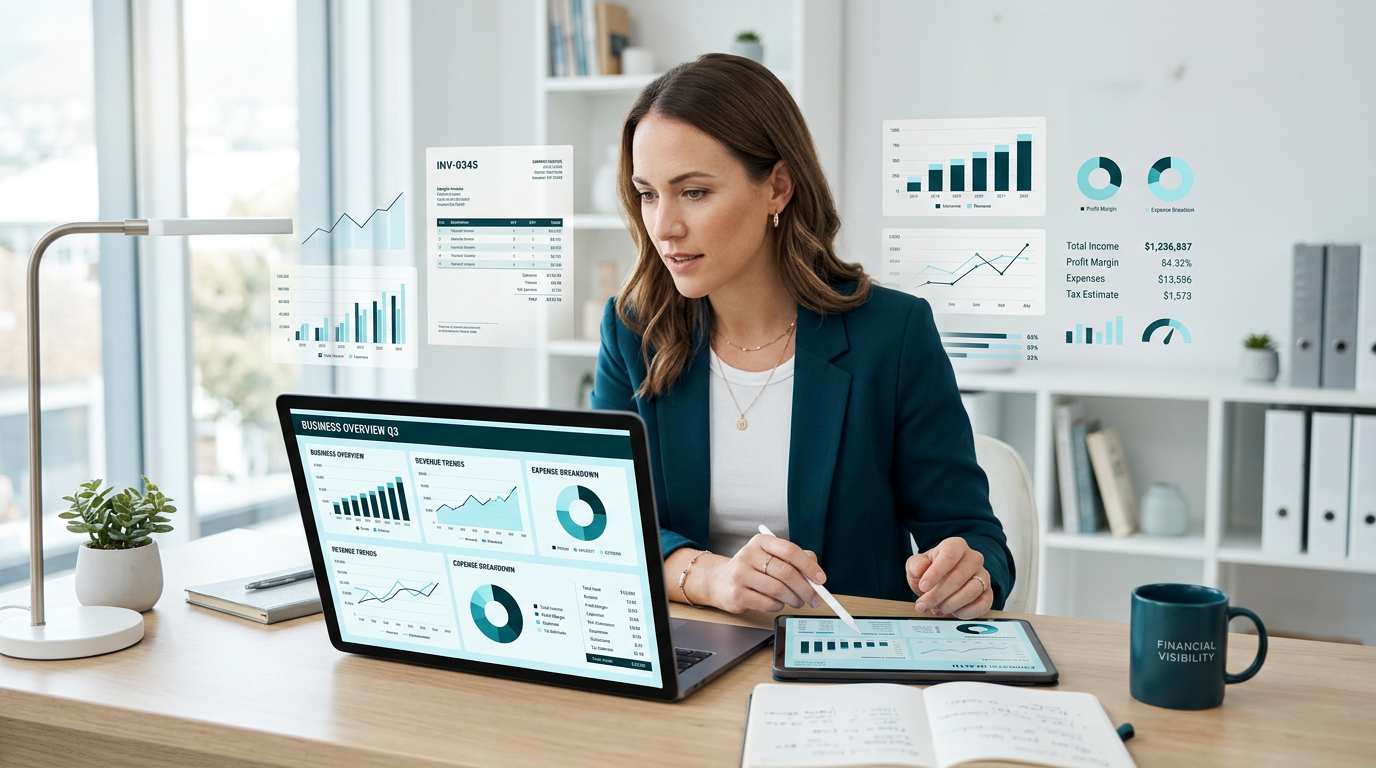
Many people running their own business have a general sense of where things stand financially. They can estimate what came in over the past month, roughly what left the account, and perhaps what should be set aside for tax. An estimate, however, is not the same as an accurate picture, and it is in that gap that costly decisions tend to happen: pricing work too low because the real cost of delivering it isn't fully understood, missing the right window to reinvest because cash position is murky, or being caught off guard by a tax bill in January because the liability was never tracked properly.
Achieving genuine financial clarity doesn't require complexity. What it takes is pairing the right tools together and using them consistently. Below are five that, used together, give sole traders exactly that kind of visibility.
1. Sage Sole Trader: Continuous Visibility Into Accounts and Tax Obligations
Sage Sole Trader is built to deliver ongoing financial visibility rather than a once-a-year snapshot. It links directly to bank accounts, automatically imports and sorts transactions, keeps track of every unpaid invoice, monitors cash flow continuously, and shows profitability in real time, so decisions can be grounded in current figures instead of assumptions.
Because the platform also handles self-assessment and Making Tax Digital requirements, the numbers needed for compliance filings are always available without a separate scramble to prepare them. Combining day-to-day financial visibility with built-in compliance readiness in one place makes this one of the most valuable tools a sole trader can adopt.
Why it matters: Having a precise, up-to-date view of how the business is performing financially underpins nearly every sound decision a sole trader will make.
2. Float: Projecting Cash Position Weeks Before It Happens
Understanding what a business earned and spent last month only tells part of the story, since it looks backward. Being able to see what the cash position will look like over the coming four, eight, or twelve weeks is what gives a sole trader the confidence to invest in the business, take on a substantial new client, or navigate a slow patch. Float links to accounting software and generates a rolling forecast that refreshes automatically whenever new transactions come in.
For sole traders whose income varies month to month, the forward view Float offers takes away the uncertainty around whether a big upcoming cost can be met, or whether there's room to fund something that would help the business expand.
Why it matters: Looking ahead at cash flow shifts financial management from something reactive into something proactive, supporting stronger decisions at every stage of running the business.
3. Feefo: Turning Client Feedback Into Business Direction
Financial clarity isn't limited to knowing what's been earned. It also involves recognising which client relationships and categories of work contribute the most value to the business. Feefo is a verified review platform that gathers structured feedback from confirmed clients, offering insight into which parts of the work clients value most and which relationships prove most productive.
Over time, patterns in these reviews and ratings show which services deserve further investment and which types of clients tend to be the most profitable, adding a layer of qualitative insight to the financial figures produced by accounting software and highlighting where the business truly generates value.
Why it matters: Knowing which work and which clients deliver the most value, both financially and in terms of satisfaction, is essential for shaping the future direction of the business.
4. Tide: Keeping Business Money on Its Own Ledger
Financial clarity begins with keeping business money separate from personal money. When income and outgoings run through a business-only account instead of a personal one, it becomes immediately obvious what the business is earning and spending, without needing to sort or categorise anything after the fact.
Tide offers sole traders a standalone current account, automatic categorisation of transactions, and a direct link to accounting software. Its integration with Sage means bank activity flows straight into the accounts without manual entry, keeping the financial picture current at all times.
Why it matters: A separate business bank account forms the structural basis of financial clarity. Without it, every piece of financial analysis takes longer and carries a greater risk of error.
5. Pleo: Capturing Every Business Expense the Moment It Occurs
For sole traders with regular business costs, whether that's supplies, travel, client entertainment, or subscriptions, the challenge lies in making sure every cost shows up in the financial picture as it happens rather than surfacing as a surprise when the bank statement arrives. Pleo provides a smart spending card, captures receipts automatically at the point of sale, and sends all expenditure straight into accounting software.
The outcome is that business spending stays visible, properly categorised, and included in the live financial picture, with no need for reconciliation at month's end.
Why it matters: Seeing all business spending as it occurs keeps the financial picture complete and ensures cash flow forecasts rest on accurate information.
Frequently Asked Questions
What sets profit apart from cash flow, and why should a sole trader care about the difference? Profit is what remains once all costs are subtracted from revenue across a given period. Cash flow, meanwhile, refers to the actual movement of money into and out of the business at particular moments. A sole trader might be profitable on paper while still running into cash flow trouble, for instance if clients are slow to pay or if large expenses land before income does. Being able to track both measures at once, which tools such as Sage and Float make far easier, is key to running a sole trader business with confidence.
How regularly should a sole trader check on their financial standing? A quick weekly look at unpaid invoices and the bank balance, paired with a fuller monthly review of profitability and cash flow, is enough for most sole traders. Cloud accounting software makes this manageable in minutes rather than hours, since the data stays current and organised. Many sole traders find that short, frequent check-ins are considerably less stressful than infrequent deep dives into a backlog of information.
What financial questions should a sole trader be able to answer at any given moment? At virtually any point, a well-organised sole trader ought to be able to say how much remains unpaid in invoices, what the current cash position is, what tax liability is likely for the year so far, and whether the business is currently profitable. If any of those answers can't be pulled up quickly from up-to-date records, it's a sign the financial system in place needs work.
In what way does financial clarity influence pricing decisions? Once a sole trader can see the genuine cost of delivering different kinds of work, factoring in time, direct expenses, and a share of overheads, pricing choices become far better informed. Clearer financial analysis often reveals that sole traders have been charging too little for their most time-consuming or resource-heavy work, and that even modest price increases can meaningfully boost overall profitability without denting demand.
Is it worth keeping a separate account for tax savings? Yes. Putting aside an estimated portion of tax liability from each payment received into a dedicated account or pot treated as off-limits is one of the most valuable financial habits a sole trader can develop. It stops the January tax bill from becoming a cash flow emergency and eliminates the underlying worry about whether the funds will be available when needed. Tools such as Coconut, or dedicated savings pots built into business banking platforms, can automate this process.